There is a srs bug in ERPNext where Zero tax & Items charging tax cannot be on one Sales Invoice . There is some trick you have to do for it to work , l dont think its a proper way to for such an enterprise software .
Thats why sometimes we recommend to have some enterprise version ,it helps to raise funding close some of these gaps . If you look at odoo , when it went enterprise there have been great improvement but if you look at it most of the code is very open source about 80% and the user base even grew bigger.
There are some of small issues that can be easily solved but everything need funding and sometimes us the community we can only solve what we are paid for by our clients and we dont even send part of the money to frappe so frappe . Things are moving fast and to catch up we need resources and having some enterprise level can actually make a great difference .
You know in odoo currently the clients are more than willing to pay for enterprise
If you have two items lets say Rice 5kgs changes tax 15% on sales then another product Orange Drink charges tax 0% , ERPNext by default cannot put these in sales invoice , if you put them , it will charge both of them 15% tax , so there some trick which is not even logical or even part of the documentation that people do and have seen even people in the community advising it as well to use but l dont think proper for such a major flaw or bug to be handled like that ever sinve version 13
yeah it works for me as well but you didnt get my point , l didnt say it does not work , l said there is a trick of making it work which not a proper way to do things and its not even supported in documentation . Imagine for new users they wont be able to figure this out .
There are definitely multiple bugs (some of which have “workarounds”).
As already mentioned we have to combine Item Tax and Sales Tax and Charges to get both taxable and non taxable items in one invoice.
Additionally, there is no real way to pull actual taxes from an invoice, as they hare held in an HTML table. This makes reporting limited and prone to inaccuracies.
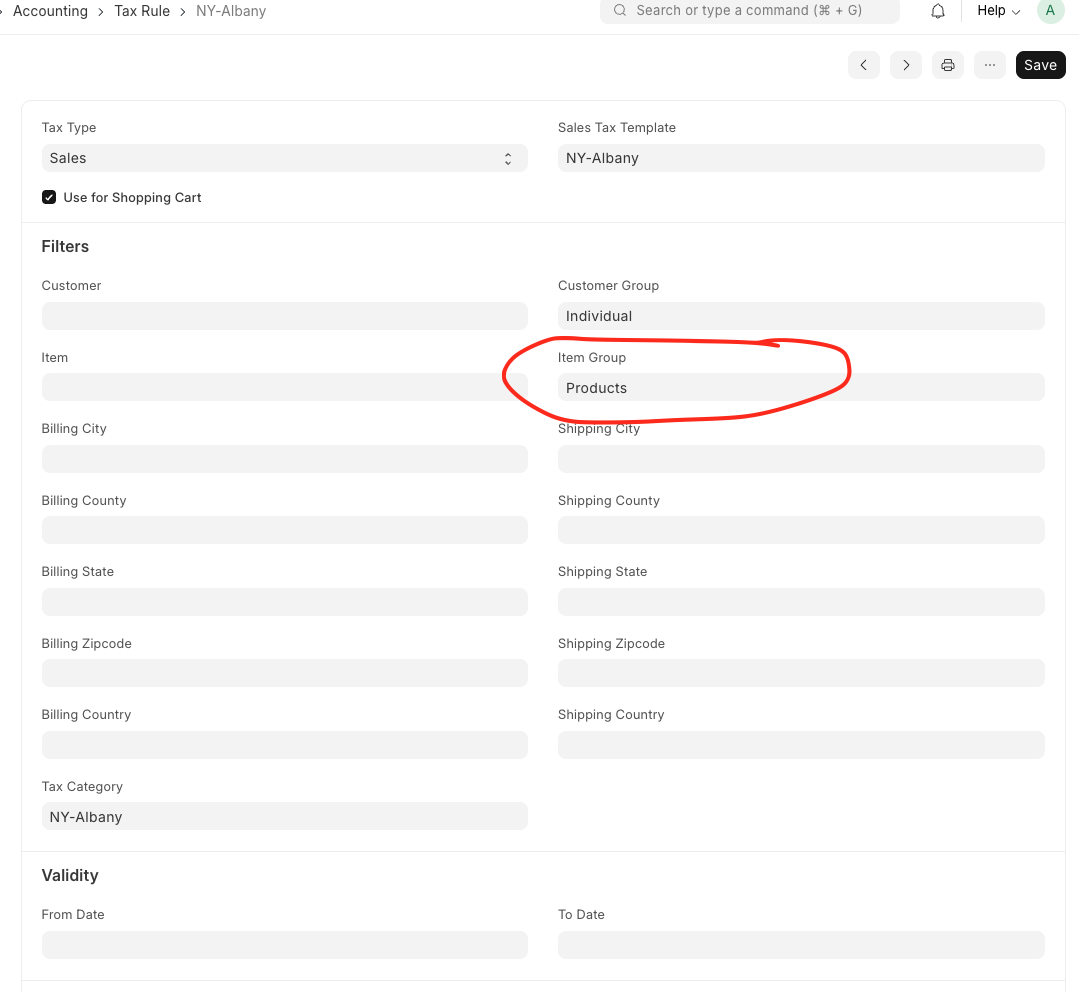
There are many fields in Tax Rule, that don’t apply, which touches on point 1. Why do we have “customer”, “product group”, etc. in `Tax Rule` if they are ignored (hence we can’t have taxable and non-taxable items in sales invoice without first applying a zero item tax for items we don’t want sales tax collected).
yeah now my main case to address and make great improvements , l know most people will not agree is that we should consinder having enterprise version , its going to ensure frappe have enough funding to do marketing , so solve bugs , make great product improvement , odoo is very good example of that . Its quite very easy to sale odoo to a client becuase odoo itslef helps a lot with marketing of the product . l know most people think of we go enterprise they will not get clients but thats not correct
I would like to state that we are successfully running a food business (Wholesale + B2C/Shopify) on ERPNext. We regularly have both taxable (e.g. 5%, 18%) items and non-taxable (zero%) items on the same invoice.
We have been able to configure this without much hassle, using the standard India Compliance app GST framework and configurations, coupled with item tax templates at the product group level (along with a few overrides at item level). It works seamlessly for us.
true that some bugs its not even neccessary to carry them for so many years you can tell this is very deliberate , yet you tell them go enterprise they refuse and say its our original philosphy but its now not working
It looks like this works but the setup is hard to discover. Does it require the India Compliance app, or can it be done in standard ERPNext? A small example of the tax and item-tax templates would be really helpful.
That seems to be the main issue it works but new users can’t discover the setup. Are there other invoice or tax cases that regularly need undocumented workarounds?
true that and am not sure if frappe team does not know this or they deliberately did it to ensure consultants and developers benefit out of it but l dont think its good business
Thanks that is useful. I am comparing how ERPNext handles this across different countries before testing it myself. Which country setup are you using and did you follow any guide?